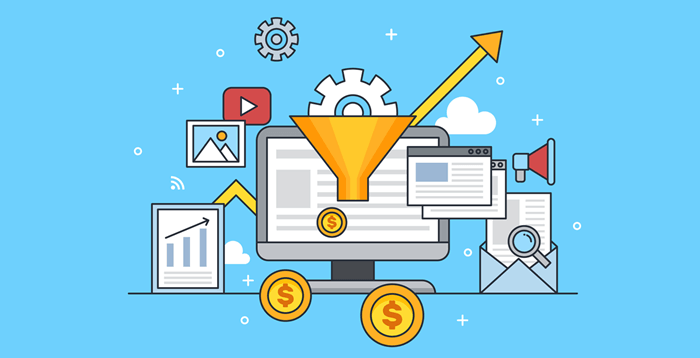
In this post you’ll learn the top KPIs to track conversions in your business and some suggestions to help you get better results.
Foreword
Imagine being able to pinpoint exactly why customers abandon their carts or what motivates them to finally click “Buy”. That’s the magic of the right KPIs—those straightforward numbers that tell the hidden story of your business.
As someone who’s worked with eCommerce and Lead Gen businesses in US and Mexico, helping them boost conversions by over 25%, I’m excited to share the top 5 KPIs to track conversions in your business. I’m also adding some suggestions to help you get better results using these KPIs.
I’ll try not to use complicated jargon, just practical insights using free tools like Google Analytics and Google Looker Studio. OK, let’s roll!
Why These KPIs Matter
In a landscape where cookies are fading and AI tools are on the rise, keeping an eye on conversions is crucial for businesses.
Maybe you already know this, but you need metrics that connect website visits to actual revenue—think about those e-commerce surges or service bookings. Focusing on these areas can help you minimize waste and achieve steady growth.
Conversion Rate: Your Guiding Star
Conversion Rate (CVR) shows the percentage of visitors who take a key action, like making a purchase or signing up. If 100 people visit your site and 5 make a purchase, that’s a 5% conversion rate.
Always aim for a range of 2-5% in retail; you can improve this by streamlining checkouts or adding trust badges. Also, web design plays a major role trying to make it easier for users to increase clicks. In fact, big retail players rely on this—track it in Google Analytics under goals for quick wins. That’s why CVR is definitely one of the most important KPIs to track conversions in your website.
Average Order Value (AOV): Maximize Each Sale
AOV is calculated by dividing total revenue by the number of orders. For instance, if a shop selling $50 shirts makes $5,000 from 100 sales, the AOV is $50.
You can boost this by bundling products or upselling at checkout, potentially increasing it by 20%. For example, some boutiques often leverage this strategy during the holiday rush, turning one-time buyers into loyal customers.
Customer Acquisition Cost (CAC): Invest Wisely in Growth
CAC is determined by dividing your marketing expenses by the number of new customers acquired. If you spend $1,000 on ads and gain 50 new customers, your CAC is $20.
It’s essential to compare this with customer lifetime value—keeping it under one-third is ideal. With ad costs on the rise in 2026, some SaaS companies are focusing on optimizing channels like email rather than relying solely on social media.
Cart Abandonment Rate: Plug the Leaks
Did you know that around 70% of shopping carts are left behind? You can figure this out by using the formula (abandoned carts / started carts) x 100.
To tackle this issue, consider using exit popups or setting free shipping thresholds. Shopify stores around the world have seen a remarkable 15% recovery rate—definitely a game changer for profit margins.
Customer Lifetime Value (CLV): Bet on Loyal Fans
CLV is calculated by multiplying the average purchase amount by how often customers buy and how long they stick around. If someone spends $100 each year for three years, that gives you a CLV of $300.
Nurturing your email list and offering loyalty perks can help extend this value. Fintech apps often keep track of this to support their big acquisition strategies in competitive markets.
| KPIs to Track Conversions | ||
|---|---|---|
| KPI | Formula | Target |
| Conversion Rate | (Conversions / Visitors) x 100 | |
| AOV | Revenue/Orders | |
| CAC | Spend / New Customers | |
| Cart Abandonment | (Abandoned / Started) x 100 | |
| CLV | Avg Purchase x Frequency x Years | |
Final Thoughts
You can setup these KPIs to track conversions in tools like Google Analytics or Google Looker Studio for free! I strongly recommend to make it a habit to review them weekly; try out one change at a time, and keep at it until you master the ability to track these KPIs and improve your decision-making skills on your digital marketing.
Ready to start tracking? Begin with your Conversion Rate today—what’s your biggest leak? Get Started Now!
Return